A Guide to Fold Your Tarde’s Issues
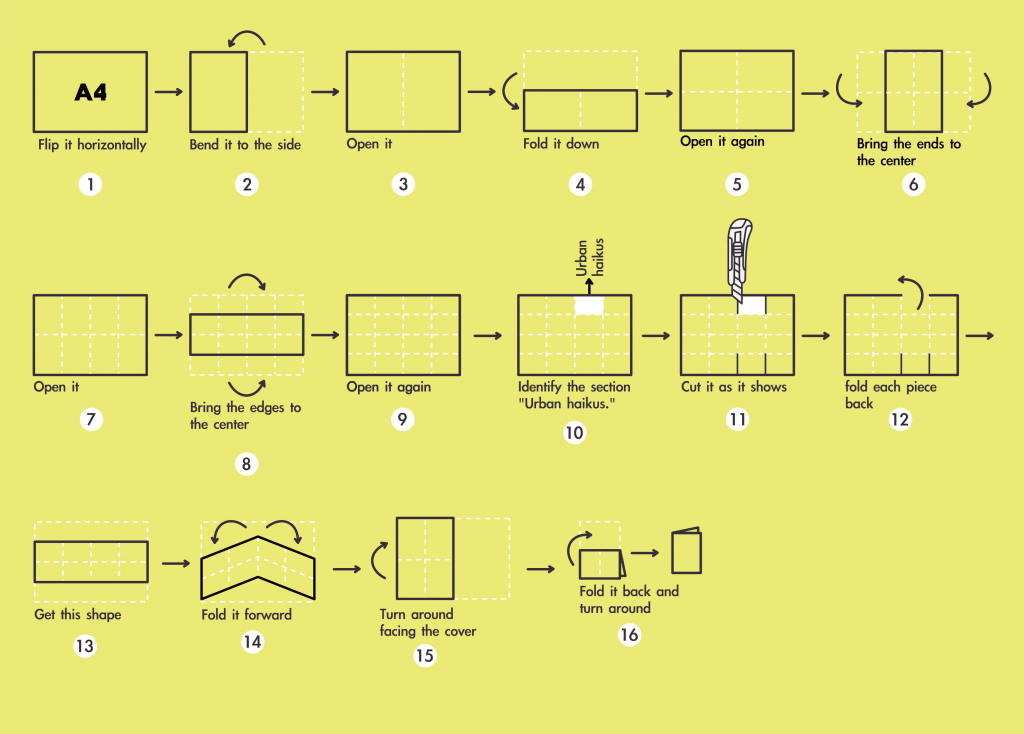
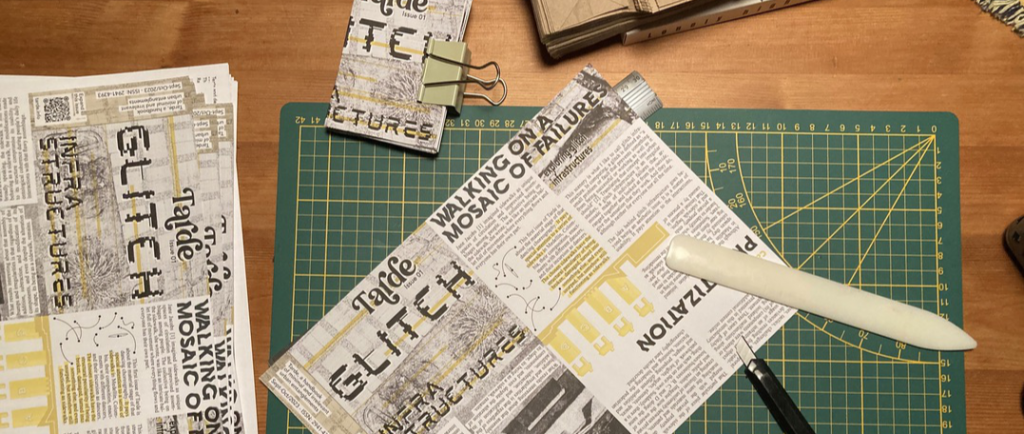
Tarde is a handbook made from a single A4 sheet, printed on both sides and folded four times. Some issues, however, may also include additional folios or other printed materials, such as stickers, postcards, photographs, or maps. These extra folios may vary in format, size, and folding method. To make the process easier, we have prepared this guide to help you print, cut, and fold all your Tarde issues.
- Before printing an issue, please open the file in Adobe Acrobat or a similar program. This will help ensure better communication with your printer and preserve the original file format.
- Please keep a ruler, a cutter, and a cutting mat, or any other surface suitable for cutting, close at hand.
Handbook
As it was already introduced, the handbook should be printed on an A4 sheet. Although in general, each issue is designed in color, it does not matter if you choose to go black and white. What is really important is that you print everything borderless unless it says otherwise. Sometimes, your printer may require additional configuration to print without borders. It may be related to paper orientation or layout. However, you know your printer better than anyone else. Just keep an eye on the document preview.
Flyer (big and small)
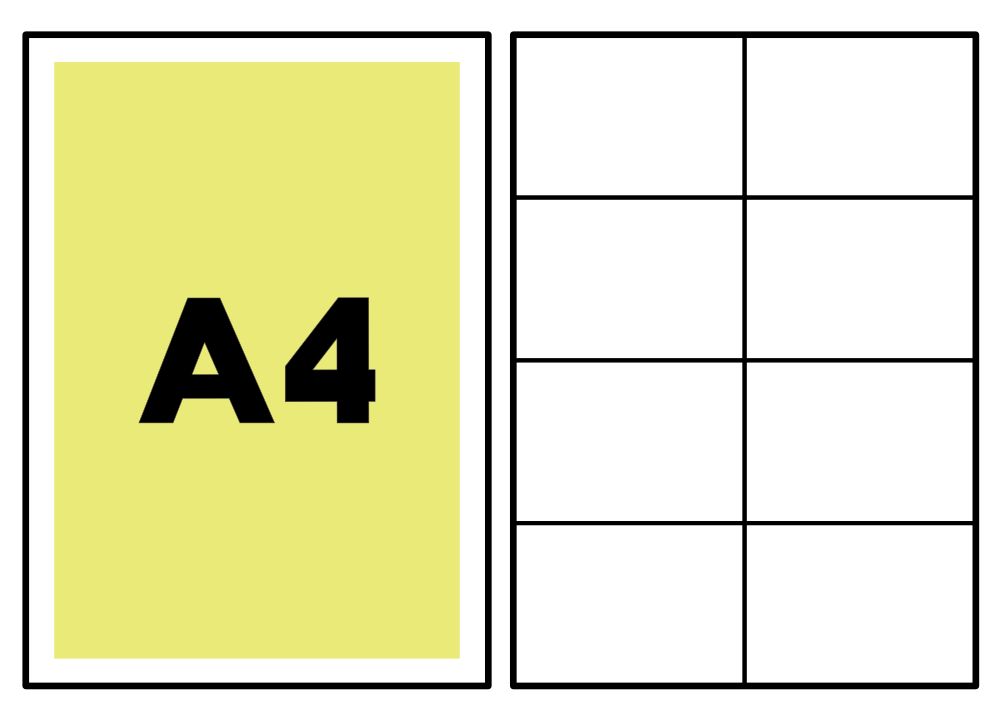
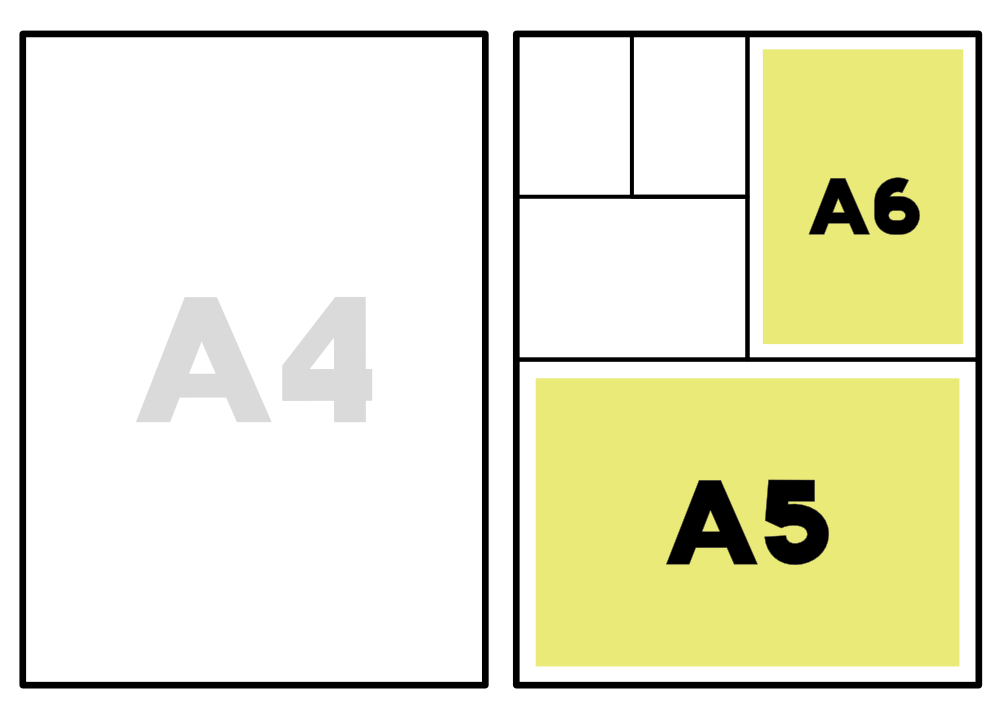
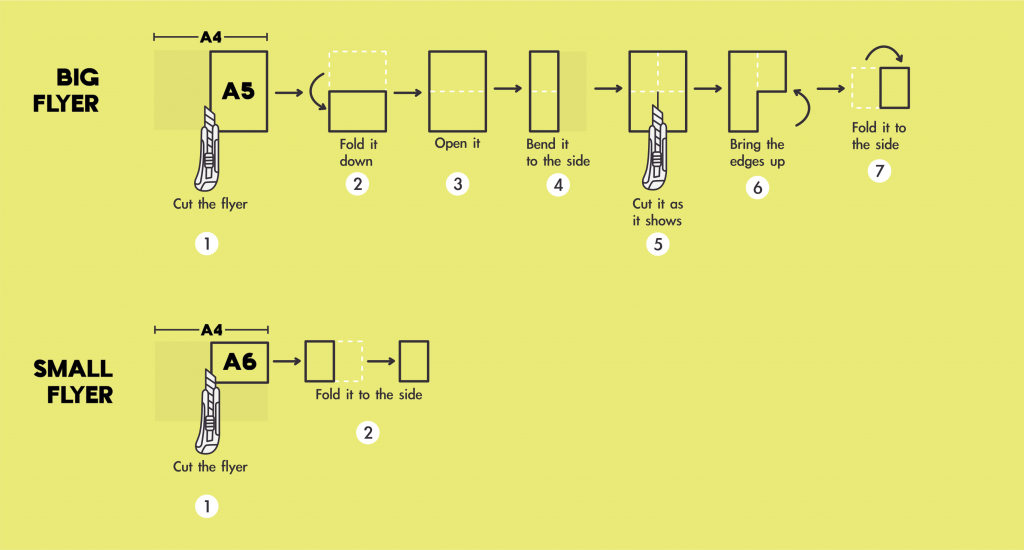
The big flyer is a piece of A5 paper, which means it is half an A4 sheet. On the other hand, the small one is A6, which is a quarter of an A4 sheet. Following the same line as the Handbook, both small and big flyers should be printed borderless. To facilitate your printing experience, the flyers can be downloaded over a full A4 sheet. Please use or recycle the rest of the sheet of paper.
Map
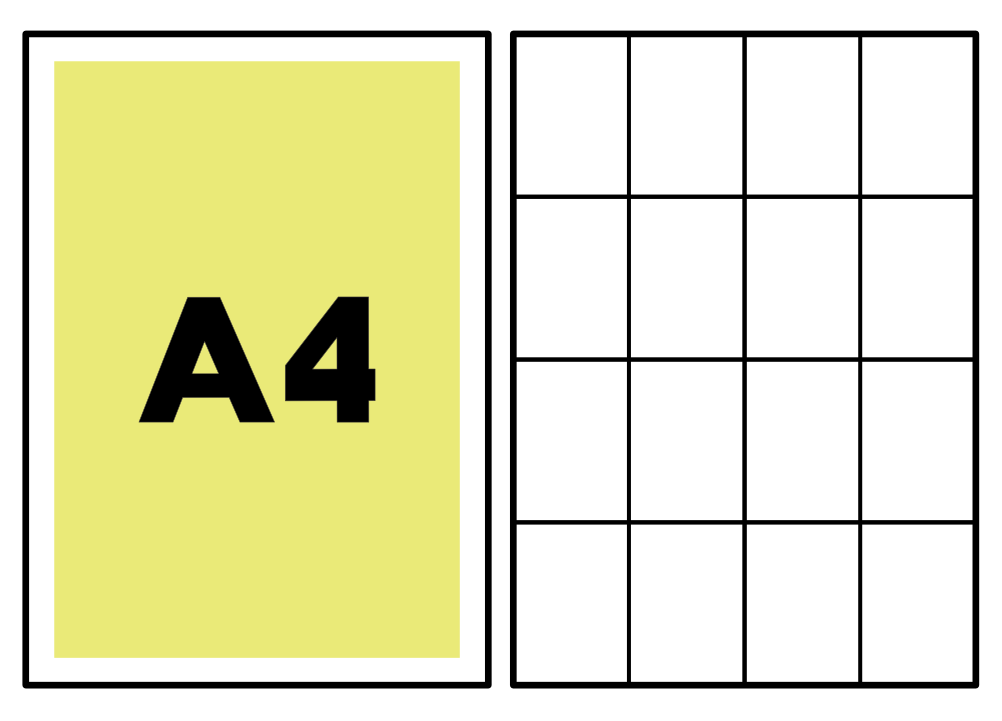
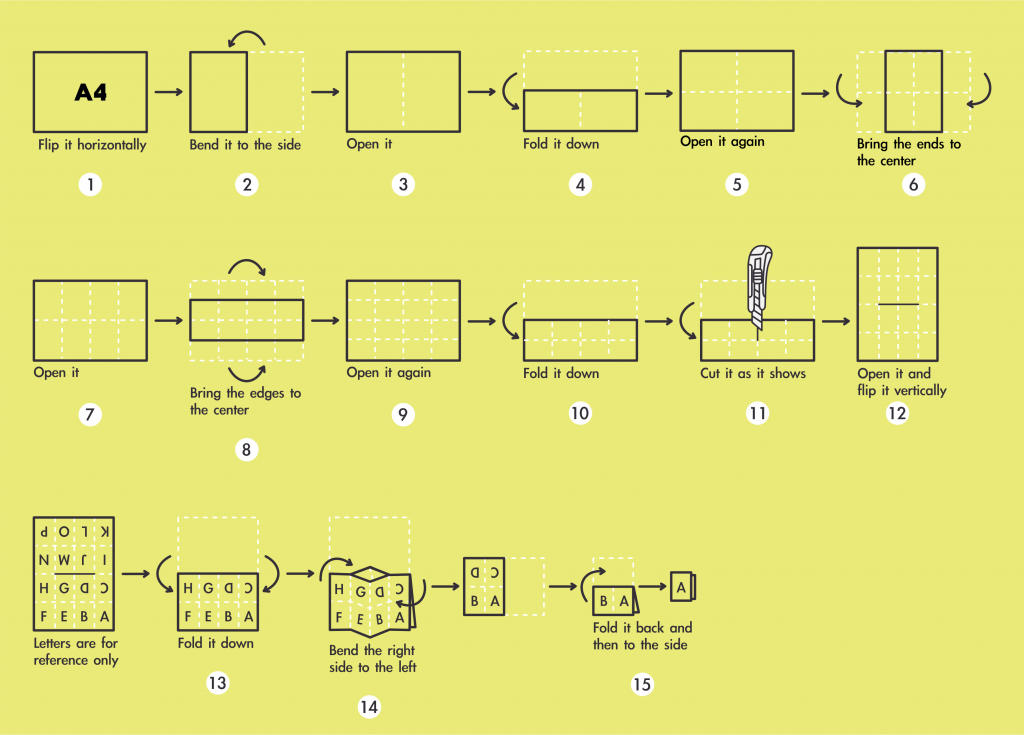
This artifact is also printed on a full borderless A4 sheet of paper. Regarding the format, the difference between this piece and the Handbook is how they are folded. Meanwhile, the Handbook is divided into eight A7 sections, and the map must be folded into 16 A8 sections.
Special number: Landscaping pavements
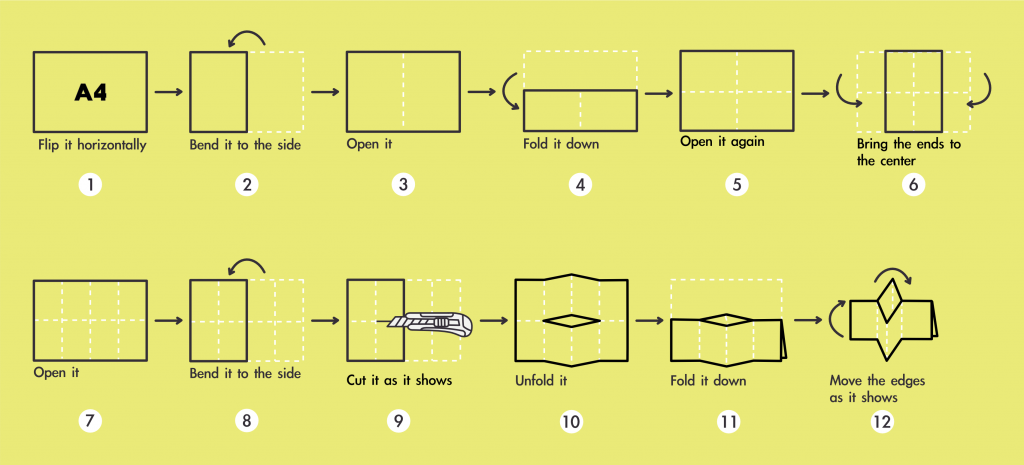
This issue experiments with a different folding format. Although it starts with an A4 sheet of paper and keeps the original A7 form when folded, the assembly process changes dramatically. The most notorious of those changes is the design of a small, foldable gallery that makes use of various paper cuts.