
Content
- Introduction to the issue
- Non-human animals inconsistencies
- The Roadkill Project
- Online references
- Handbook references
Introduction to the issue
Far from being a human-made product, cities are the convergence of a continuous set of assemblages involving all kinds of elements such as animals, weather, plants, and other objects and beings we have labeled as non-humans. This category is ontologically broad enough to include everything but people and still handy to pack such heterogeneity into a concept that can be semiotically extended and its components symmetrically compared to those inside the category of humans, at least in terms of agency.
The notion of the nonhuman, as Edwin Sayes [1] suggests, has been used as an umbrella term to encompass a wide range of entities capable of affecting others and altering their trajectories. Non-human is then an unstable category hiding tremendous complexity. Although semiotically speaking, a bench may be in the same position as a dog, the two elements are not politically the same [2]. Following that line of reasoning, a stray dog is not the same as a pet.
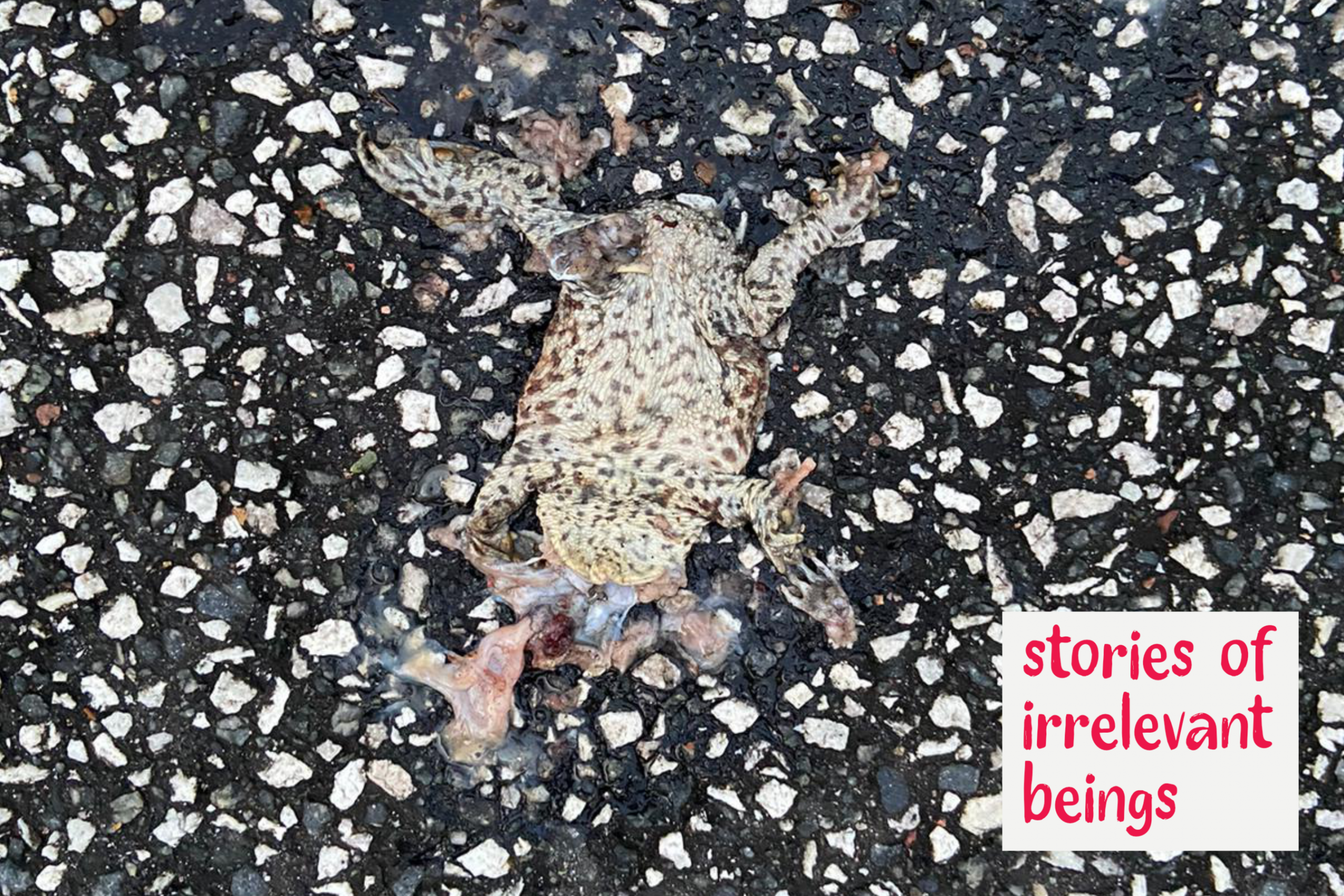
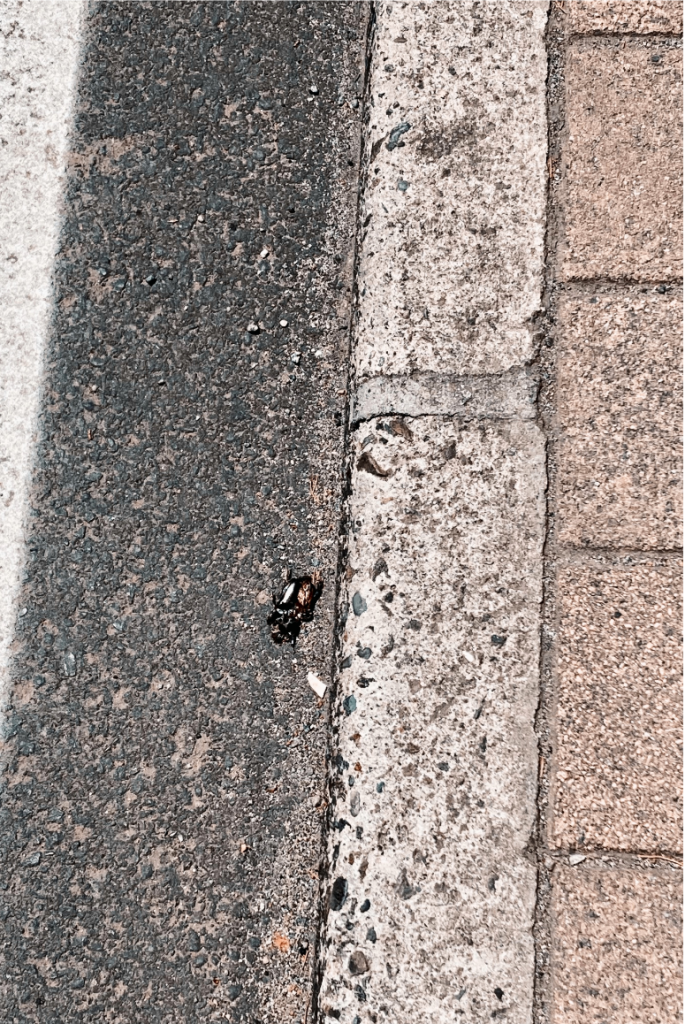
This second issue of Tarde explores a bunch of fatal encounters between people and a particular type of non-humans we have problematized in our handbook as insignificant. That categorization obeys a careless way of considering and approaching others. It means those individuals who are not like us. Along with this handbook, our eyes have been on those scenarios where non-humans ended up beaten, crushed, and shattered —which means, dead— mainly due to a human lack of care for their presence. Following that, the idea of insignificant beings —whose analytical core is based on a matter of relation rather than on its ontology— is circulated through some vignettes of frogs, ants, hedgehogs, and worms. To expand the notion of otherness, we have prepared a brief online discussion on animal inconsistencies and enhanced a visual exercise on roadkill that we started in our printed version.
Non-human inconsistencies
We encourage you to download and print this edition’s handbook and the included additional small flyer. The flyer comes with an invitation to write or draw what caring for those others means to you. Don’t forget to send us your work, we want to publish it online!
The claims for and the vision of a more-than-human city [3, 4, 5] as a space of multispecies exchange and cohabitation [6, 7, 8] is often perceived as a scenario where, despite the differences, humans and non-humans animals [could | should] live together under a hybridizing regime of extended democracy [9, 10, 11] and multispecies negotiations [12]. As Chris Philo [13] has noticed, more-than-human relationships in the city have been framed by a vast body of literature made of “enchanting, bewitching, seductive [and] chock-full of hope, optimism.”
Yes, there may be friction [14] between humans and non-human animals, but —as if it were a process of fabulation— in the end, there is a possible conflict resolution plus an academic maxim addressing and imagining some ethical-political futures [15, 16, 17]. The optimism Philo [18] highlights comes to matter through concepts such as [urban] coexistence, cohabitation, and conviviality. However, as Paula Arcari and others [19] have suggested, the enthusiast perspective of a more-than-human city often ignores and hides anthropocentric processes of commodification and colonization spatialized, for example, in zoos, petting zoos, laboratories, slaughterhouses, and racecourses.
Notwithstanding, as this issue proposes, the human lack of care and attention for certain forms of life in urban environments—or affected by urbanization—is also evident in daily interactions, based on disregard and neglect. Siobhan O’Sullivan [20] problematized how humans link themselves to animals by conceptualizing two types of inconsistency. The first inconsistency, known as the external one, concerns “the way we treat animals compared to humans.” The external inconsistency is just an extension of the classic—and already outdated—anthropocentric dichotomy of nature-culture. Meanwhile, the second one, named internal, refers to “the way we treat nonhuman animals in relation to other nonhuman animals” [21]. This last type of inconsistency frames the discussion of insignificant others in the city.
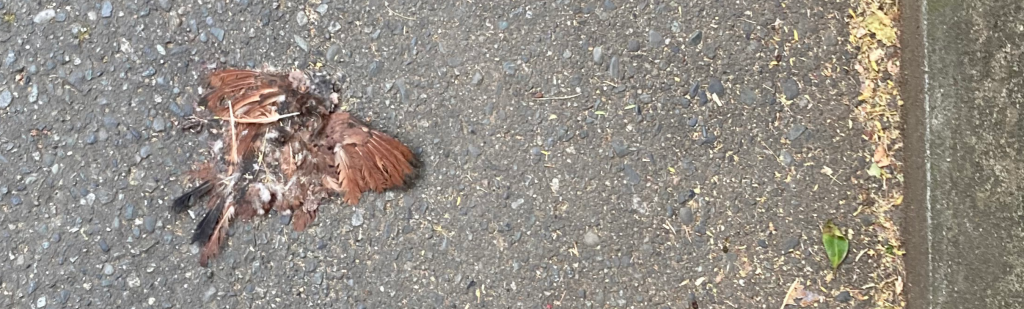
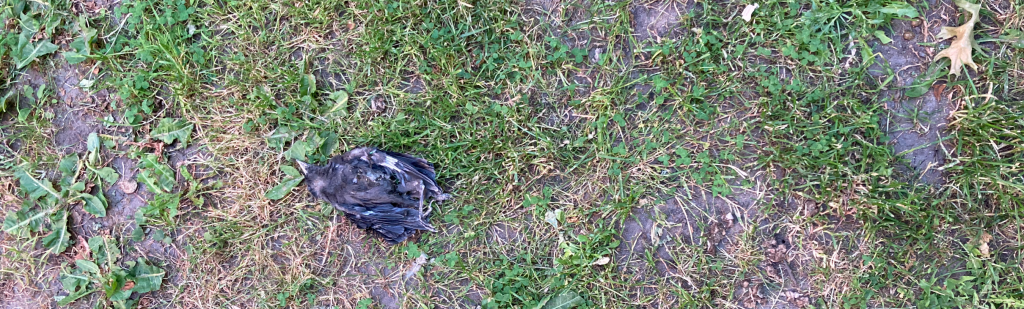
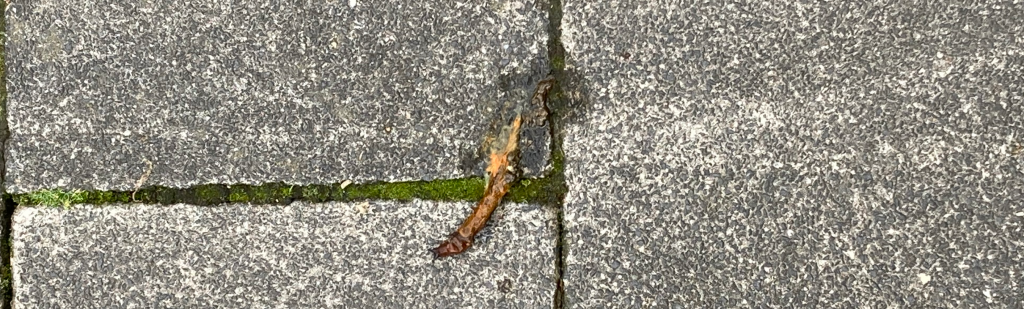
Imagine, instead of frogs, ants, hedgehogs, slugs, and earthworms, a road paved with the corpses of dogs, cats, horses, bunnies, or even bees. One does not need to go too far with the number of individuals. A solitary dog, who passed away hit by a truck, concerns more than, for instance, a rat lying dead on a sidewalk intentionally killed by someone —see our set of roadkill infographics. To make this exercise more extreme, picture a street covered by freshly dead humans. Or just by one. What a difference! right?
However, the external and internal inconsistencies categories are neither solid statements nor general rules. The same thing occurs with the notion of “insignificant others,” which should be understood as a methodological and temporal way to situate a bunch of nonhuman beings entangled in power relationships with humans based on carelessness. As Grace Clement has noticed, “an animal can equally be categorized as meat or as a companion animal as a friend or as a meal, [as a matter of concern or not]—not based on the qualities of the animal, but based simply on human preferences” [22]. Additionally, the disregard for other beings inhabiting the city, particularly those being killed in public places due to a human lack of attention, is not just an individual problem of a distracted or careless pedestrian, biker, or motorist. It is a more structural matter regarding city roads or those connecting urban settlements.
Roads fragment the habitats of many animal species. Applied to human living spaces, this would mean that, for example, the connection between the kitchen and the living room is blocked by a road. Animals cross roads when, for example, they are searching for food, looking for mating partners, or moving between winter and summer habitats (such as toads during their spring migration). Animal species that make these migrations are therefore particularly frequently affected by roadkill [23].
Specifically, in the following exercise, we will explore some of the data obtained by the Roadkill Project (RkP), a citizen program held by the University of Natural Resources and Life Sciences, Vienna, that registers and maps roadkill incidents reported by citizens, mainly in Austria. Besides being an open and collaborative project, one of the particularities of the RkP is its detailed attention to—or concern for—all kinds of animals, regardless of their size, type, background, or the possible economic implications of the incidents they were involved in.
[Roadkill] usually only refers to larger mammals and occasionally birds. This is also reflected in official statistics – data on animals killed in road traffic are mainly collected on so-called “huntable game”. Data on all other animal species – including endangered species such as amphibians – are mostly missing [24].
The Roadkill Project
Perhaps the core of the Roadkill Project (RkP) is its interactive and collaborative online map service where researchers and citizen can upload their roadkill observations. The artifact has been working since 2014 and has more than 17,000 registered reports. For the purposes of this exercise, we will visualize the dead animals reported in the first six months of 2023.
If you are already familiar with the Idaho dead animal stockpile from the handbook (download it here), perhaps you may notice below a few differences between the data reported in Idaho and the data collected in Austria. Despite the obvious dissimilarities between both places in terms of location and fauna, there are some interesting findings to compare regarding the type of animals reported, their monthly reports, and the way the RkP has labeled some of the collected information.
For instance, despite both stockpiles being collective exercises based on inventorying of nonhuman lifeless bodies, the intentions behind those counts are different. The Idaho stockpile gives the sensation of being an index of administrative procedures and animal salvage parts. People mainly report big animal (elk and deer) collisions either for insurance purposes or to inform that they are taking advantage of the incident, either taking the dead animal’s body to be consumed, exhibited, or used in different processes. Meanwhile, as it was already introduced, what the RkP is seeking is to make visible and discuss roads as careless infrastructures towards other beings. It does not matter how big or useful they may be.
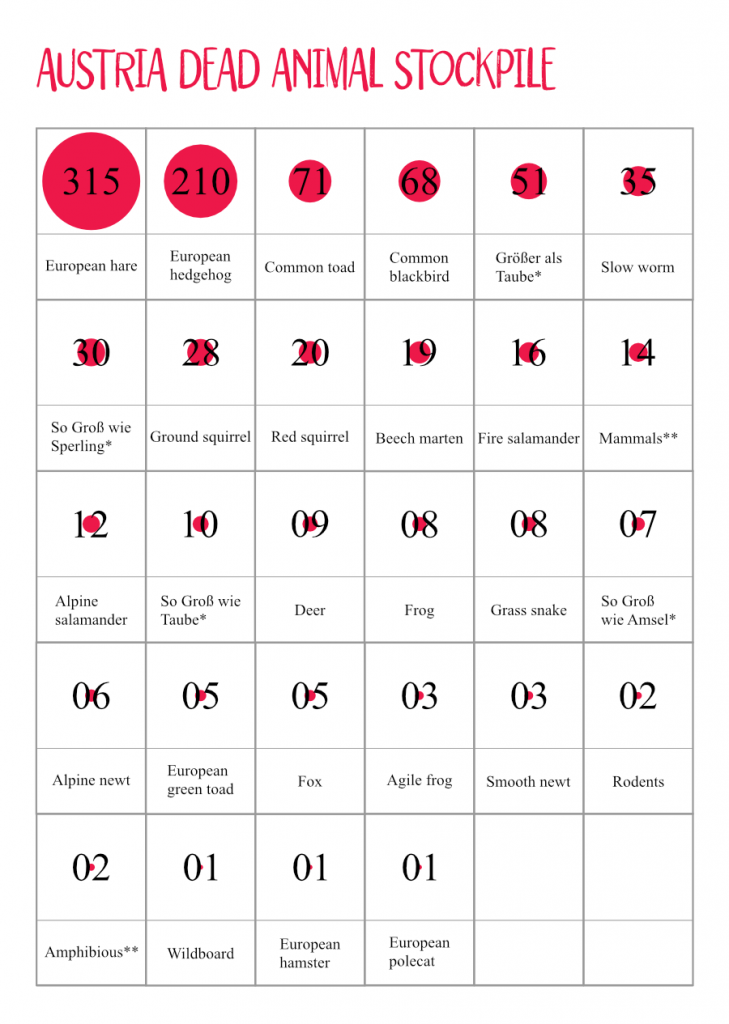
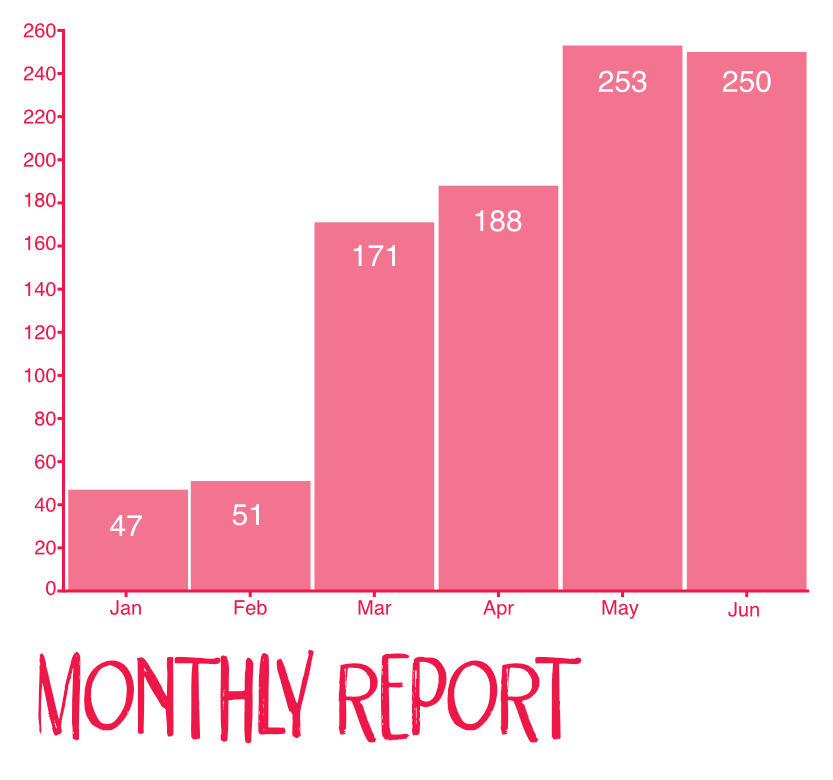
*Although the RkP has a broader approach to registering all kinds of beings killed by vehicles on roads, that attention to small animals seems, sometimes, to play against the idea of visualizing all the incidents. The reason is that some dead animals are difficult to identify and need to be classified into practical categories. Regarding birds, they have created four categories to organize their findings: Größer als Taube (Bigger than a pigeon), Größer als Sperling (Bigger than a sparrow), so Groß wie Taube (As big as a pigeon), and so Groß wie Amsel (As big as blackbird).
**A similar situation occurs with other beings that are not possible to recognize and need to be organized by classes: mammals and amphibians, for example.
Online references
[1] Sayes, E. (2014). Actor–Network Theory and methodology: Just what does it mean to say that nonhumans have agency? Social Studies of Science, 44(1), 134–149. https://doi.org/10.1177/0306312713511867.
[2] Pickering, A. (1995). The Mangle of Practice: Time, Agency, and Science. University of Chicago Press.
[3] Franklin, A. (2017). The more-than-human city. The Sociological Review, 65(2), 202–217. https://doi.org/10.1111/1467-954X.12396.
[4] Philo, C., and Wilbert, C. (eds.) (2000). Animal Spaces, Beastly Places. Routledge.
[5] Houston, D., Hillier, J., MacCallum, D., Steele, W., & Byrne, J. (2018). Make kin, not cities! Multispecies entanglements and ‘becoming-world’ in planning theory. Planning Theory, 17(2), 190–212. https://doi.org/10.1177/1473095216688042
[6] Haraway, D. (2007). When Species Meet. University og Minnesota Press.
[7] Bingham, N. and Hinchliffe, S. (2008). Reconstituting natures: Articulating other modes of living together. Geoforum, 39(1), 83-87, https://doi.org/10.1016/j.geoforum.2007.03.008.
[8] van Dooren, T., Kirksey, E, and Münster, U. (2016). Multispecies Studies: Cultivating Arts of Attentiveness. Environmental Humanities 1, 8(1): 1–23. https://doi.org/10.1215/22011919-3527695
[9] Groove, K. (2009). Rethinking the nature of urban environmental politics: Security, subjectivity, and the non-human. Geoforum 40, 207–216.
[10] Latour, B. (2005). Reassembling the Social: An Introduction to Actor-Network-Theory. Oxford Press.
[11] Skillington, 2020. Democracy, Biodiversity and More than Human Justice Imperatives: Institutional Responses to Crisis. Soc. Sci. 9(9), 166; https://doi.org/10.3390/socsci9090166.
[12] Fox, R. (2006). Animal behaviours, post-human lives: everyday negotiations of the animal–human divide in petkeeping. Social & Cultural Geography, 7(4), 525-537, DOI: 10.1080/14649360600825679
[13] Philo, C. (2016) Less-than-human geographies. Political Geography, 60, pp. 256-258
[14] Lowenhaupt-Tsing, A. (2005). Frictions: An Ethnography of Global Connection. Princeton University Press.
[15] Cooke, M. (2020). Ethics and politics in the Anthropocene. Philosophy & Social Criticism, 46(10), 1167–1181. https://doi.org/10.1177/0191453720903491
[16] Gruen, L. (2015). Entangled Empathy: An Alternative Ethic for Our Relationships with Animals. Lantern Books.
[17] Krause, S. R. (2021). Political respect for nature. Philosophy & Social Criticism, 47(2), 241–266. https://doi.org/10.1177/0191453720910441
[18] Philo, C. (2016) Less-than-human geographies. Political Geography, 60, pp. 256-258. doi:10.1016/j.polgeo.2016.11.014
[19] Arcari, P., Probyn-Rapsey, F., & Singer, H. (2021). Where species don’t meet: Invisibilized animals, urban nature and city limits. Environment and Planning E: Nature and Space, 4(3), 940–965. https://doi.org/10.1177/2514848620939870
[20] O’Sullivan, S. (2011). Animals, Equality and Democracy. Palgrave.
[21] Ibid., p.p. 9-10.
[22] Clement, G. (2011). “Pets or Meat”? Ethics and Domestic Animals. Journal of Animal Ethics, 1(1), 46–57. https://doi.org/10.5406/janimalethics.1.1.0046.
[23] Roadkill. (n.d.). What is the relevance of roadkill? https://roadkill.at/en/about/background.
[24] Roadkill. (n.d.). What does roadkill mean? https://roadkill.at/en/about/background.
Handbook references
[1] Shingne, MC. (2022). The more-than-human right to the city: A multispecies reevaluation. Journal of Urban Affairs, 44(2), 137-155, DOI: 10.1080/07352166.2020.1734014
[2] Ibid, p. 7.
[3] Ibid, p. 8.
[4] Puig de la Bellacasa, M. (2017). Matters of Care: Speculative Ethics in More Than Human Worlds. University of Minnesota Press.
[5] Bedoya-V, MM., Arias-Alzate, A., Delgado-V, C. (2018). Atropellamientos de fauna silvestre en la red vial urbana de cinco ciudades del Valle de Aburrá (Antioquia, Colombia). Caldasia 40(2):335-348. https://dx.doi.org/10.15446/caldasia.v40n2.68297
[6] Bartonička, T., Andrášik, R., Duľa, M., Sedoník, J. and Bíl, M. (2018), Identification of local factors causing clustering of animal-vehicle collisions. Jour. Wild. Mgmt. 82, 940-947. https://doi.org/10.1002/jwmg.21467
[7] Englefield B, Starling M, Wilson B, Roder C, and McGreevy P. (2020). The Australian Roadkill Reporting Project—Applying Integrated Professional Research and Citizen Science to Monitor and Mitigate Roadkill in Australia. Animals 10(7). https://doi.org/10.3390/ani10071112